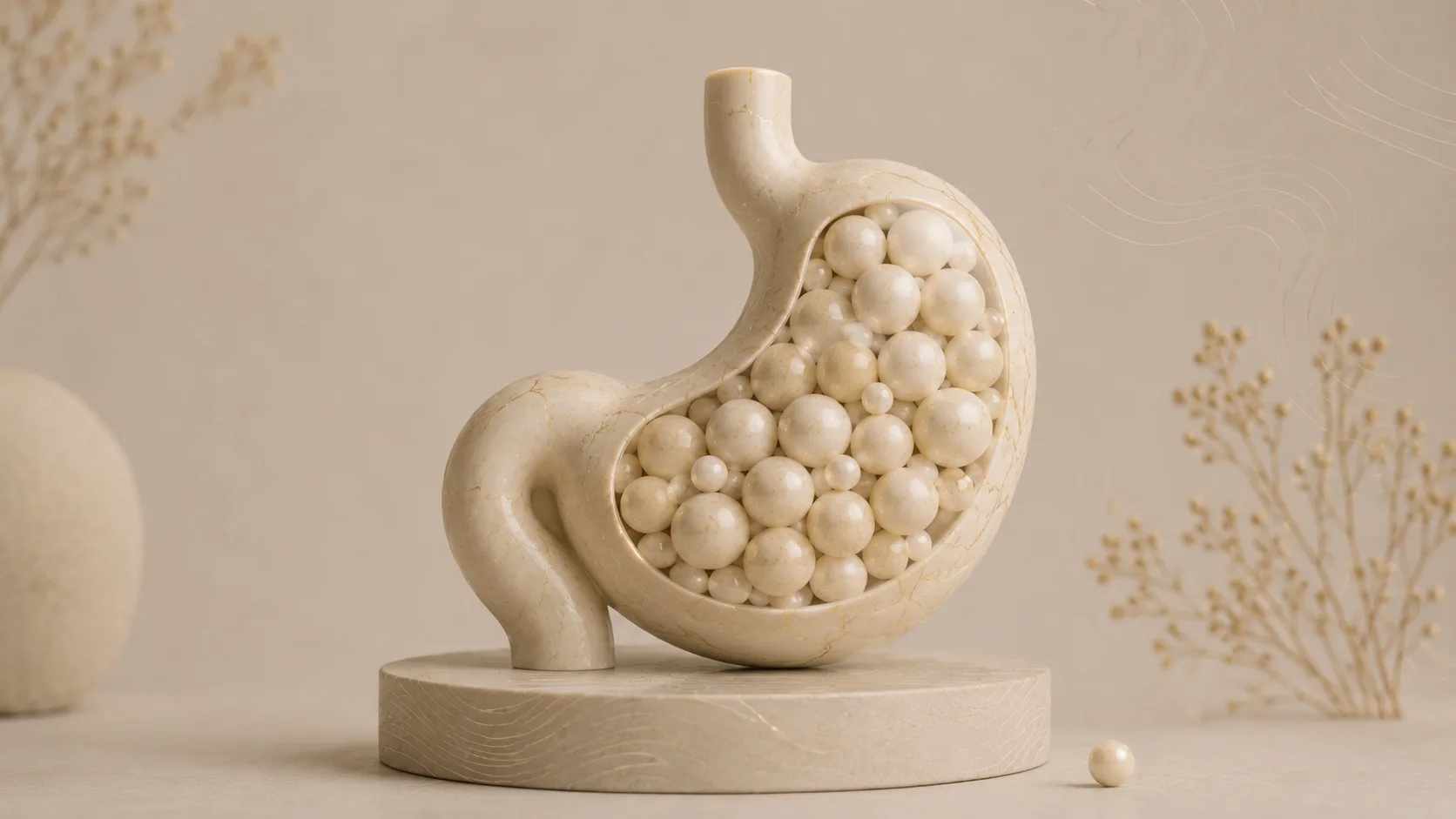
Why You Bloat
The real mechanics behind bloating and distension.
Bloating is one of the most common digestive complaints, and one of the most misunderstood. It isn't always about "too much gas" — it's often about how your body handles and responds to gas, and how your gut community ferments what you feed it.
Gas, transit, and a misfiring reflex
Some bloating is simple: undigested carbohydrates reach the colon, bacteria ferment them, and that produces gas. But the feeling of bloating and the visible swelling of distension don't always match the actual volume of gas present.
In many people, distension is driven by a reflex problem researchers call abdomino-phrenic dyssynergia — the diaphragm contracts and the abdominal wall relaxes in response to normal amounts of gut contents, pushing the belly out. The trigger can be ordinary; the response is exaggerated.
FODMAPs and the fermenters
Certain rapidly fermentable carbohydrates — often grouped as FODMAPs — are especially gas-producing. How strongly you react depends partly on the makeup of your own microbiome and how it processes those compounds.
This is why the same meal can leave one person comfortable and another distended. The food is identical; the ecosystem digesting it is not.
Where ferments fit — and how to go slow
Live fermented foods and gradually increasing fiber can support a more balanced, better-adapted gut community over time. The key word is gradually: ramping up fiber and ferments too fast can temporarily increase gas while your microbiome adjusts.
Start with small servings, give it a couple of weeks, and let the ecosystem catch up to the new menu.
- Bloating is often about how your body responds to gas, not just how much there is.
- Rapidly fermentable carbs (FODMAPs) and your individual microbiome both shape the reaction.
- Introduce fiber and fermented foods gradually to minimize temporary gas.
- 1.Foley A, Burgell R, Barrett JS, Gibson PR (2014). Management strategies for abdominal bloating and distension. Gastroenterology & Hepatology.
- 2.Mari A, Abu Backer F, Mahamid M, et al. (2019). Bloating and abdominal distension: clinical approach and management. Advances in Therapy.
Wild Origin makes food, not medicine. This article is for curiosity and education — it is not medical advice, and our products are not intended to diagnose, treat, cure, or prevent any disease. If you are managing a health condition, talk to a qualified clinician.

Why Your Microbiome Matters
The trillions of microbes living inside you — and what they actually do.