
Women's Health & Your Gut
Hormones, the estrobolome, and the microbiomes unique to women.
Women's bodies carry not one microbiome but several in close conversation — the gut, the vaginal community, and the hormonal system they help regulate. The gut, in particular, plays a surprising role in managing estrogen, which ripples out to nearly every stage of a woman's life.
The estrobolome: where gut meets hormones
A specific set of gut bacteria — collectively nicknamed the estrobolome — produces enzymes that help regulate how much estrogen circulates in the body. When this community is balanced, it helps keep estrogen in a healthy range. When it's disrupted, estrogen metabolism can shift, with downstream effects researchers are actively connecting to conditions from PMS to bone health to menopausal symptoms.
This is one of the clearest examples of the gut acting as an endocrine organ: the microbes you feed help set the hormonal tone for the rest of your body.
A second key ecosystem
Unlike the gut, a healthy vaginal microbiome is often defined by low diversity — it's typically dominated by protective Lactobacillus species that keep the environment acidic and resistant to infection. When that dominance slips, the risk of conditions like bacterial vaginosis rises.
The gut is thought to act as a reservoir that can help reseed and support the urogenital community, which is part of why whole-body gut care matters for women's intimate health, not just digestion.
Probiotics, hormones, and life stages
Research into Lactobacillus-based probiotics for recurrent bacterial vaginosis and urinary tract health is promising, though results are strain-specific and still maturing. Meanwhile, the gut–hormone link is being explored across the female lifespan — from PCOS and fertility to the metabolic and bone changes that come with menopause.
The practical foundation is the same one that supports any healthy microbiome: diverse plants and fiber, live fermented foods, and consistency — with the understanding that women's hormonal context gives that foundation extra reach.
- A set of gut bacteria called the estrobolome helps regulate circulating estrogen.
- A healthy vaginal microbiome is Lactobacillus-dominant, and the gut helps support it.
- Strain-specific probiotics show promise for urogenital health; the dietary basics still matter most.
- 1.Baker JM, Al-Nakkash L, Herbst-Kralovetz MM (2017). Estrogen-gut microbiome axis: physiological and clinical implications. Maturitas.
- 2.Ravel J, Gajer P, Abdo Z, et al. (2011). Vaginal microbiome of reproductive-age women. Proceedings of the National Academy of Sciences.
- 3.Homayouni A, Bastani P, Ziyadi S, et al. (2014). Effects of probiotics on the recurrence of bacterial vaginosis: a review. Journal of Lower Genital Tract Disease.
- 4.Qi X, Yun C, Pang Y, Qiao J (2021). The impact of the gut microbiota on the reproductive and metabolic endocrine system. Gut Microbes.
Wild Origin makes food, not medicine. This article is for curiosity and education — it is not medical advice, and our products are not intended to diagnose, treat, cure, or prevent any disease. If you are managing a health condition, talk to a qualified clinician.
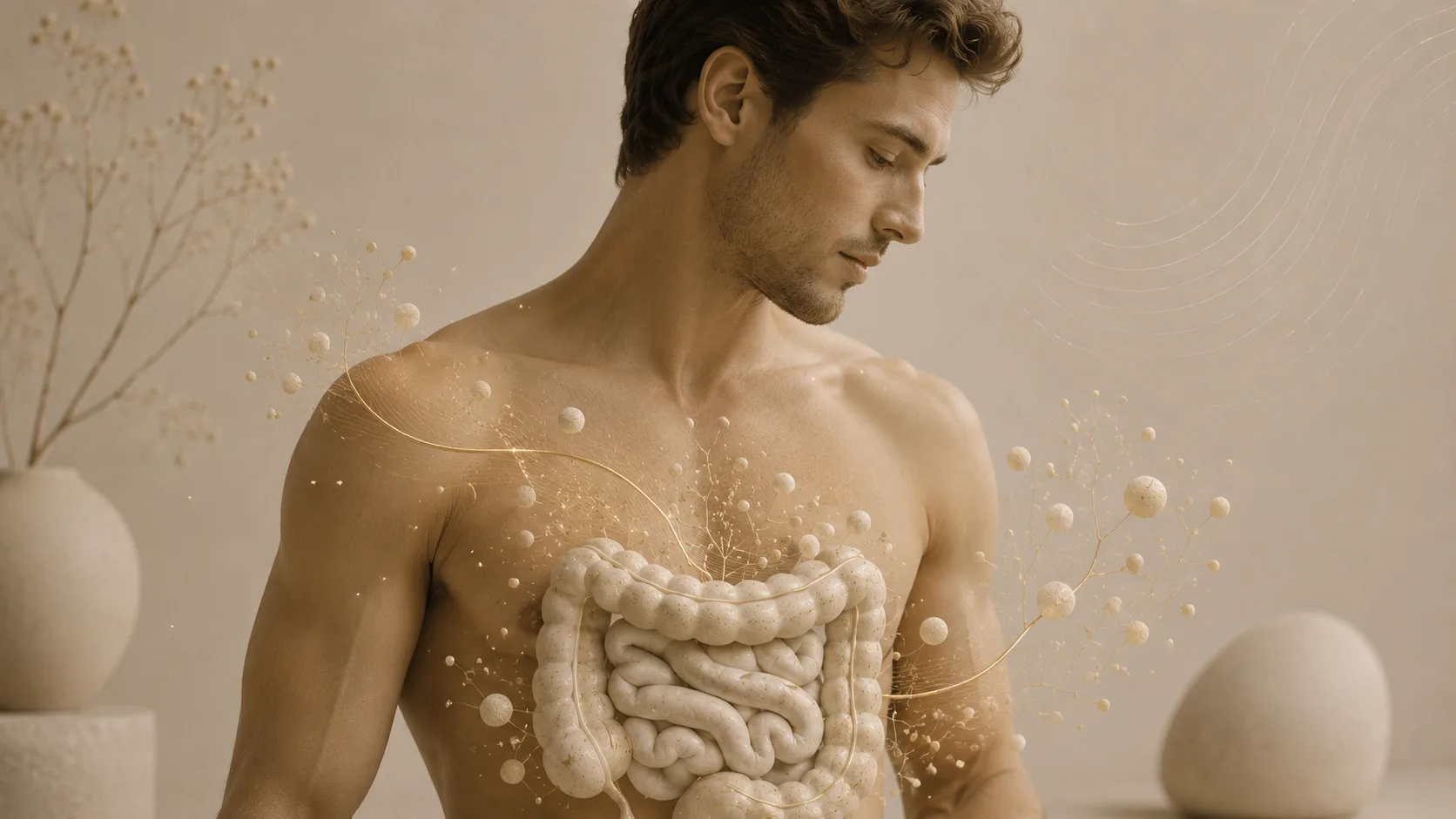
Men's Health & Your Gut
Testosterone, heart health, and the microbiome's role in both.

Why Your Microbiome Matters
The trillions of microbes living inside you — and what they actually do.