Alcohol and the Microbiome
What a drink actually does to the trillions of microbes in your gut — and where the science is genuinely settled.
Alcohol is one of the most thoroughly studied disruptors of the gut microbiome — and one of the few where the research points in a consistent direction. Most of what you swallow is absorbed before it travels far, but enough alcohol and its byproducts reach the colon to land squarely in the middle of your microbial ecosystem. What happens next depends a lot on how much, and how often.
A drink lands in an ecosystem
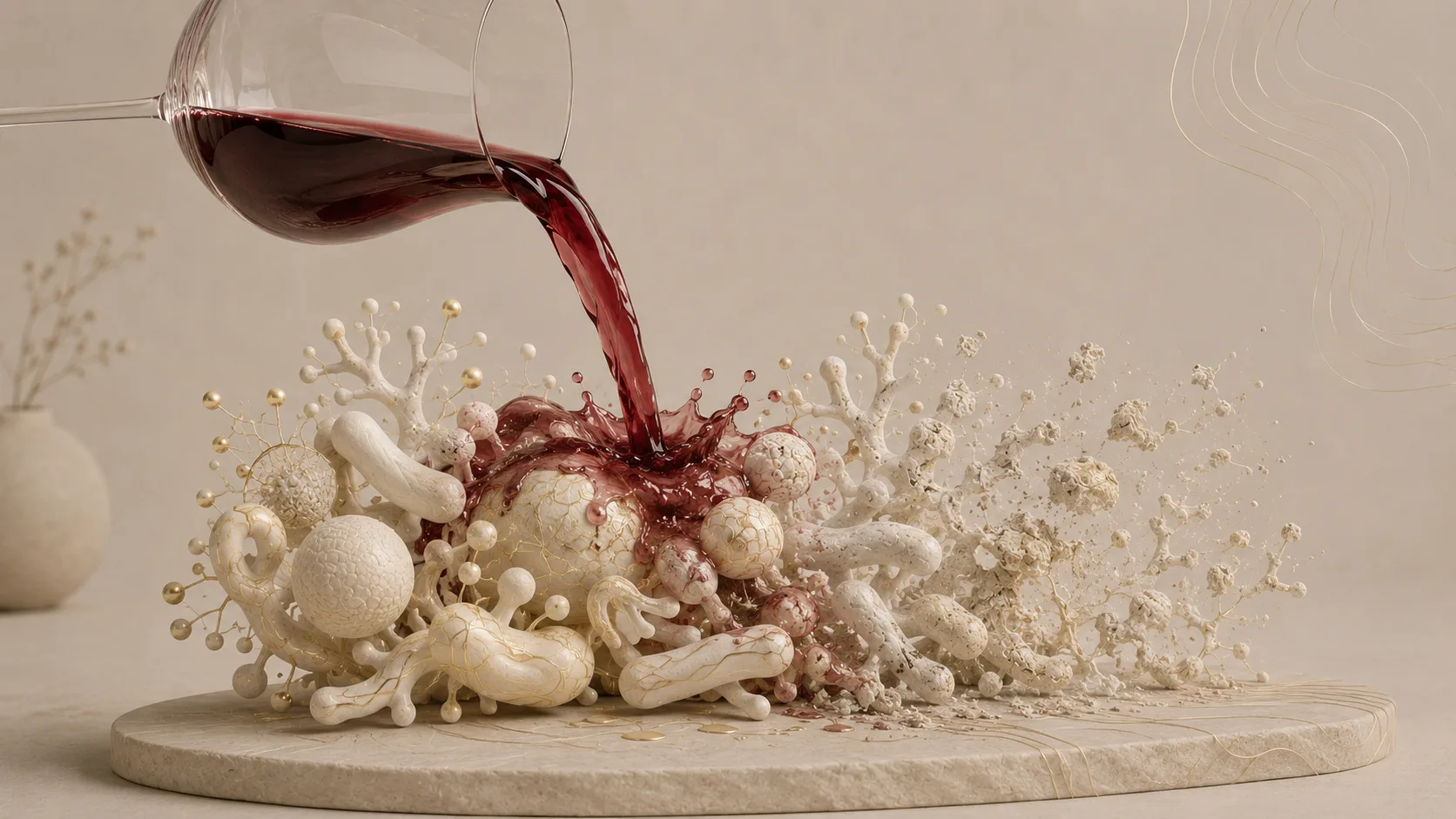
Your gut isn't a passive tube that alcohol simply passes through. The colon houses tens of trillions of microbes, and alcohol — along with the compounds your body and your bacteria make as they break it down — reaches that community directly. One of those byproducts, acetaldehyde, is produced in part by gut bacteria themselves and is toxic to the cells lining your intestine.
So a drink isn't just a personal experience; it's an event in an ecosystem. The question researchers have spent the last decade answering is what that event does to the balance of species living there — and whether it matters for the rest of the body.
The balance tips: dysbiosis
When researchers compared the colonic microbiomes of people with alcohol use disorder to those of non-drinkers, they found a measurably altered community — a state called dysbiosis. A subset of heavy drinkers showed lower abundance of beneficial groups like Bacteroidetes and an overgrowth of Proteobacteria, the phylum that includes many pro-inflammatory species.
Reviews of the field describe the same pattern: chronic alcohol exposure tends to reduce overall microbial diversity and shift the community toward a less favorable, more inflammatory profile. Lower diversity is one of the most consistent markers of a stressed gut, and heavy drinking is a reliable way to push it down.
The barrier springs a leak
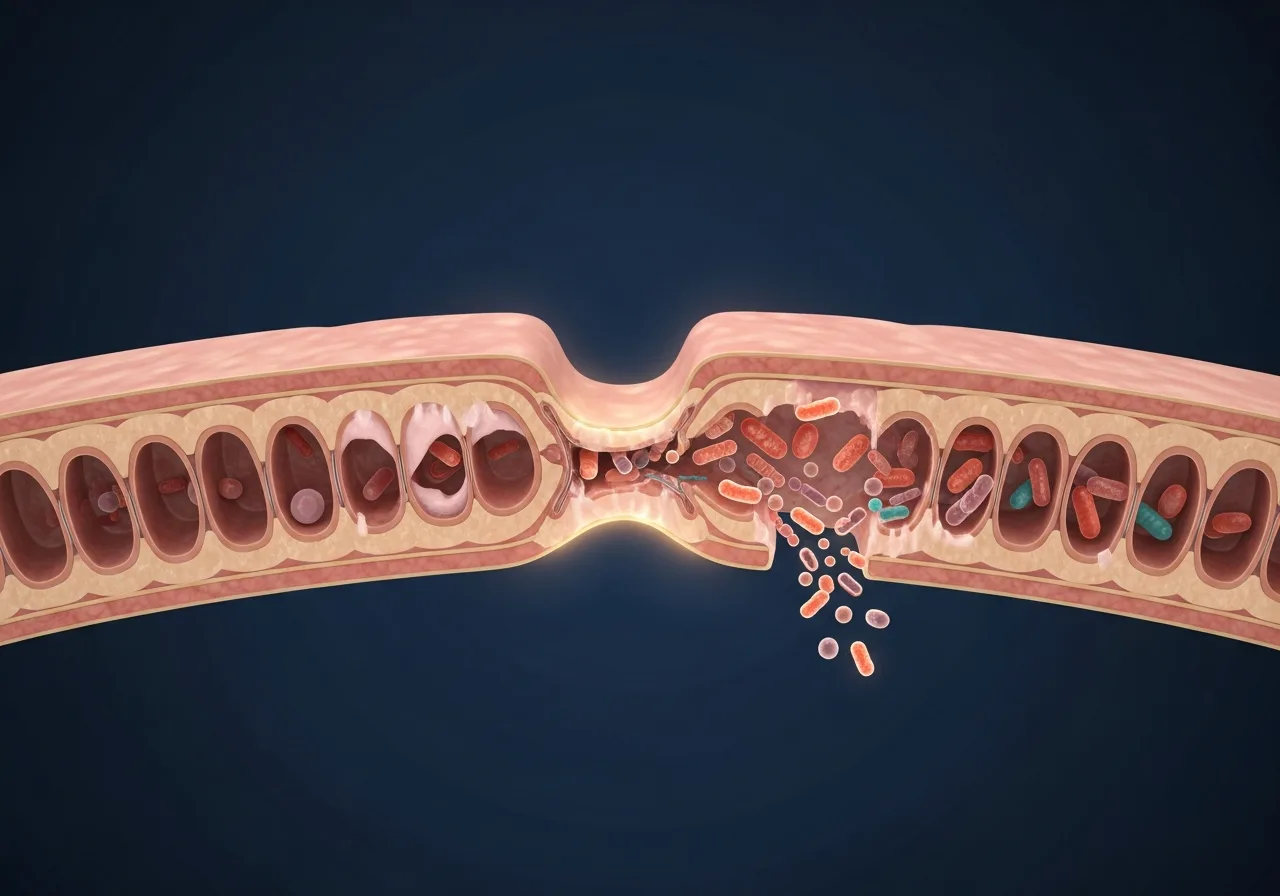
A healthy gut lining is selectively sealed — it lets nutrients through while keeping bacteria and their fragments out of the bloodstream. Alcohol can compromise that seal. Studies show that heavy drinking increases intestinal permeability, loosening the tight junctions between the cells of the gut wall.
Once the barrier leaks, bacterial components such as endotoxin (LPS) can cross into circulation, triggering inflammation that reaches the liver and beyond. This gut-derived inflammation is now considered a key mechanism linking alcohol to liver disease — and the dysbiosis above appears to make the leak worse, a feedback loop between a disrupted community and a weakened wall.
It even reaches the brain
The gut–brain connection shows up here too. In a study of people with alcohol dependence, those with a leakier gut and more altered microbiomes reported higher depression, anxiety, and craving during withdrawal than those whose gut barriers stayed intact.
It's a striking hint that some of how heavy drinking makes people feel may run through the gut — though this is an association in a specific clinical group, not proof that fixing the microbiome would change the outcome.
Dose and frequency are the whole story
Almost all of the strongest evidence comes from chronic, heavy use. The effects on diversity, the barrier, and inflammation scale with how much and how often someone drinks — this is a dose-dependent story, not a verdict on a single glass.
What a light or occasional drink does to a healthy microbiome is far less clear, and the honest answer is that the science isn't settled there. Some fermented and polyphenol-rich drinks, like red wine, have even been studied for modest effects on microbial diversity — but that's a thin and much-debated thread next to the robust evidence on heavy use.
What actually helps
The most reliable lever is the obvious one: less alcohol, less often. The disruptions described here track with intake, and giving the gut stretches without alcohol gives the community and the barrier room to recover.
Beyond that, the basics still apply — a fiber-rich, plant-diverse diet and live fermented foods support the same diversity that heavy drinking erodes. None of this is a license to drink more or a treatment for alcohol-related disease; if drinking is a concern, that's a conversation for a clinician, not a kitchen.
- Chronic, heavy drinking reliably reduces gut microbial diversity and shifts the community toward a more inflammatory state (dysbiosis).
- Alcohol can loosen the gut barrier, letting bacterial endotoxin leak into the blood and drive inflammation that reaches the liver.
- The effects are dose-dependent — strongest in heavy use; the impact of light, occasional drinking is far less certain.
- 1.Engen PA, Green SJ, Voigt RM, Forsyth CB, Keshavarzian A (2015). The gastrointestinal microbiome: alcohol effects on the composition of intestinal microbiota. Alcohol Research: Current Reviews.
- 2.Mutlu EA, Gillevet PM, Rangwala H, et al. (2012). Colonic microbiome is altered in alcoholism. American Journal of Physiology — Gastrointestinal and Liver Physiology.
- 3.Leclercq S, Matamoros S, Cani PD, et al. (2014). Intestinal permeability, gut-bacterial dysbiosis, and behavioral markers of alcohol-dependence severity. Proceedings of the National Academy of Sciences.
- 4.Bishehsari F, Magno E, Swanson G, et al. (2017). Alcohol and gut-derived inflammation. Alcohol Research: Current Reviews.
Wild Origin makes food, not medicine. This article is for curiosity and education — it is not medical advice, and our products are not intended to diagnose, treat, cure, or prevent any disease. If you are managing a health condition, talk to a qualified clinician.
Why Your Microbiome Matters
The trillions of microbes living inside you — and what they actually do.
The Gut–Brain Axis
How your gut and your brain stay in constant conversation.