Your Gut and Your Mood
The emerging links between the microbiome, depression, and anxiety.
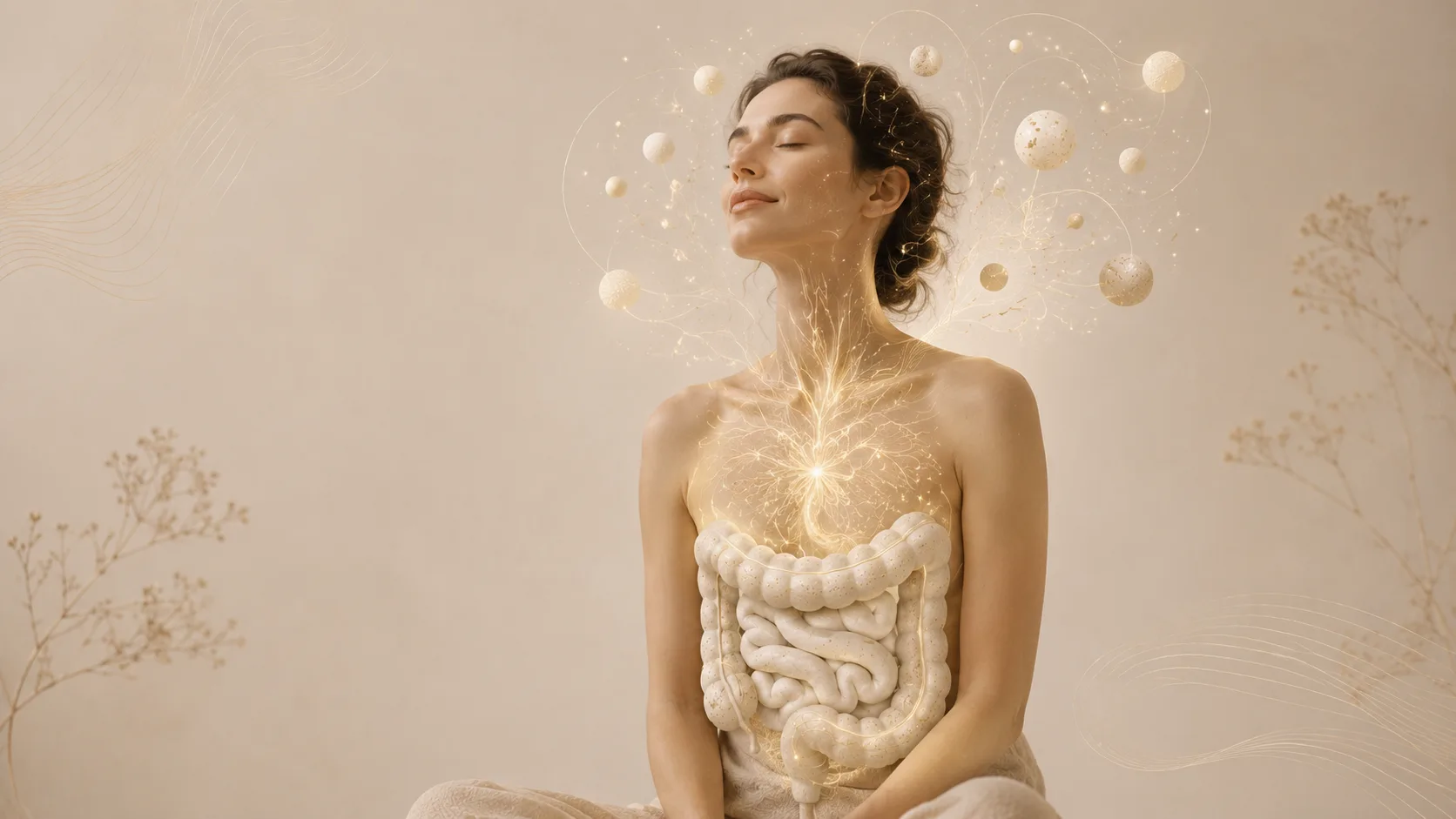
This is one of the most exciting — and most overhyped — corners of microbiome science. The honest version is genuinely interesting: there is a real, well-documented association between the makeup of the gut microbiome and mood. What we don't yet have in humans is proof that one causes the other.
What the studies actually show
Large studies have found that people with depression tend to have measurably different gut communities. One population-level analysis linked depression and lower quality of life with the depletion of specific bacteria, including Coprococcus and Dialister. Other work has also documented altered microbial composition in people diagnosed with major depressive disorder.
These are associations. They tell us the gut and mood travel together — not yet which is driving which, or whether a third factor (diet, sleep, stress) is shaping both.
From correlation toward cause
The most provocative evidence comes from animals. When researchers transplanted gut bacteria from depressed humans into rats, the animals took on depression-like behaviors — suggesting the microbiome can carry part of the signal, at least in rodents.
Animal causality is not human causality. But it's enough to take the hypothesis seriously and keep studying it carefully, rather than dismissing it or overselling it.
What you can reasonably do
The interventions that support a healthier microbiome are the same ones that broadly support mood: a fiber-rich, plant-diverse diet, live fermented foods, regular movement, and good sleep. None of this is a substitute for mental-health care, and it shouldn't be framed as one.
Think of gut care as a supporting input, not a treatment — a reasonable, low-risk thing to get right while the science continues to mature.
- Depression is reliably associated with a different gut microbiome composition.
- Animal transplant studies hint at causation, but human causality is not established.
- Gut-supportive habits may help mood, but they are not a replacement for mental-health care.
- 1.Valles-Colomer M, Falony G, Darzi Y, et al. (2019). The neuroactive potential of the human gut microbiota in quality of life and depression. Nature Microbiology.
- 2.Jiang H, Ling Z, Zhang Y, et al. (2015). Altered fecal microbiota composition in patients with major depressive disorder. Brain, Behavior, and Immunity.
- 3.Kelly JR, Borre Y, O'Brien C, et al. (2016). Transferring the blues: depression-associated gut microbiota induces neurobehavioural changes in the rat. Journal of Psychiatric Research.
Wild Origin makes food, not medicine. This article is for curiosity and education — it is not medical advice, and our products are not intended to diagnose, treat, cure, or prevent any disease. If you are managing a health condition, talk to a qualified clinician.
The Gut–Brain Axis
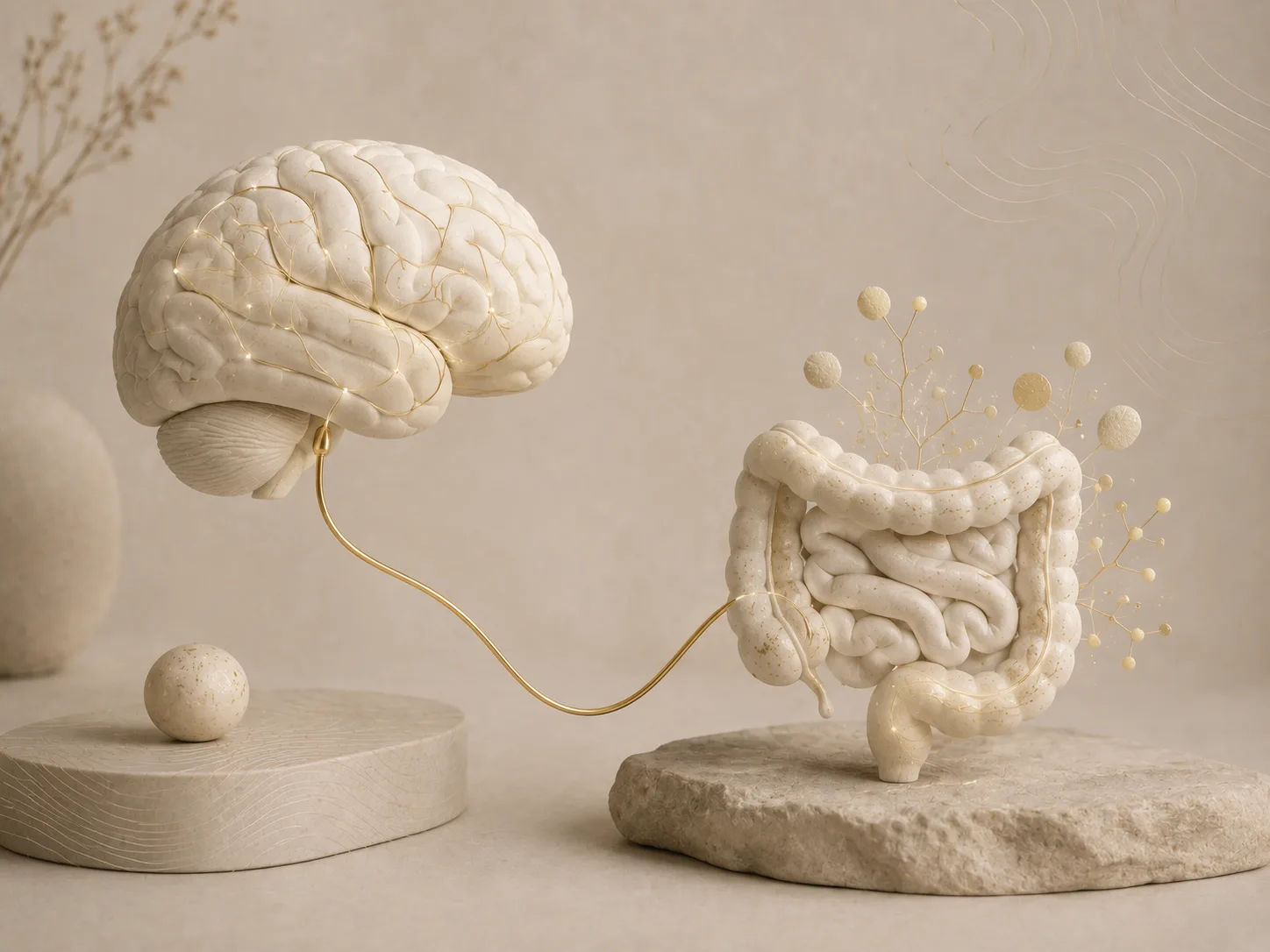
How your gut and your brain stay in constant conversation.